
Jeremy Clarkson Reveals He’s Deliberately Leaving 200 Acres Empty This Year — Because Farming It Would Guarantee A Loss

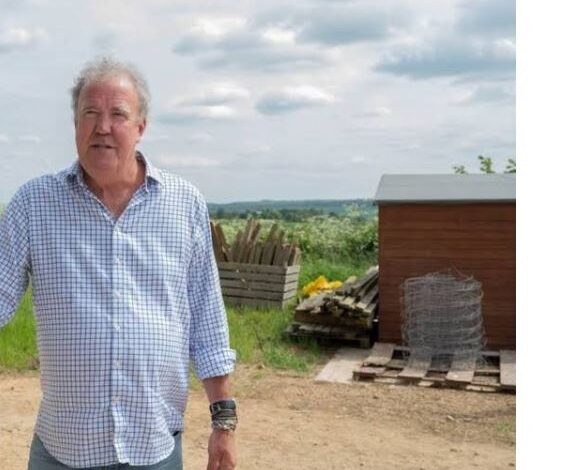
It’s one thing for a harvest to fail because of bad weather. It’s another thing entirely to look at your own land, do the maths, and decide the smartest financial move is to plant nothing on it at all. That’s exactly the decision Jeremy Clarkson revealed he’d made this year at Diddly Squat, and it says something genuinely troubling about the state of British arable farming right now.
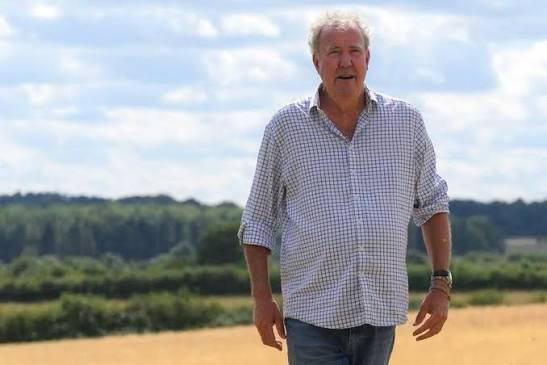
Speaking candidly about the realities of running his 1,000-acre Oxfordshire farm, Clarkson explained that roughly 200 acres had been deliberately left bare this season. The reasoning wasn’t about crop rotation or soil health, it was pure economics. He and his team knew, going in, that if they planted wheat or barley on that land, they would definitely make a loss. Rather than spend money on seed, fuel, and labour purely to lose more money at harvest, leaving the ground empty was, perversely, the more financially sound choice.
It’s a genuinely stark admission, particularly paired with another detail Clarkson shared around the same time: despite working between 15 and 20 hours a day through the summer months, he said it had become essentially impossible to make any real money from actually growing food on the farm. For a man whose entire public persona over the past several years has been built around documenting the day-to-day grind of farming, it’s about as blunt a summary of the industry’s underlying economics as he’s ever offered.
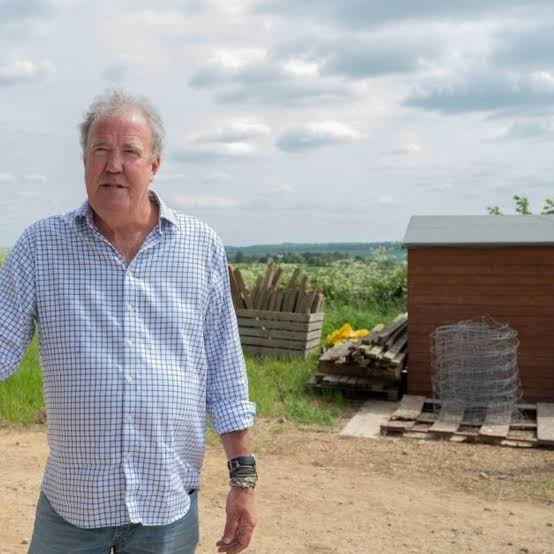
Clarkson’s individual struggles reflect a much larger, genuinely worrying picture across British agriculture this year. The National Farmers’ Union warned recently that the country could face genuine food shortages come autumn, a direct consequence of unusually low rainfall combined with persistently high temperatures throughout the growing season. It’s a warning that extends well beyond any single farm’s bottom line, touching on food security concerns for the country as a whole.
To his credit, Clarkson has been careful to note that his own situation, while still genuinely difficult, is considerably more cushioned than most working farmers. He’s pointed out that Diddly Squat benefits from revenue streams most farms simply don’t have access to, the farm shop, the pub, and the Amazon Prime television show itself, telling one follower directly that most farms don’t have TV shows to keep them going. It’s a rare moment of Clarkson explicitly acknowledging his own relative advantage within an industry he’s spent years advocating for.
That advocacy has become a genuinely consistent thread running through Clarkson’s public life well beyond the show itself. He’s previously challenged government planning reforms directly, pushing for farmers to be allowed to convert unused agricultural buildings into housing or retail space as an additional income stream, part of a broader pattern of using his platform to push for practical changes rather than simply airing frustrations.
For anyone who’s watched Clarkson’s Farm and assumed the show’s financial struggles were largely manufactured for entertainment value, moments like this one serve as a genuinely sobering reminder that they aren’t. Two hundred empty acres, a genuinely stark, visible representation of an industry where, for many working farmers this year, the maths simply doesn’t add up, no matter how many hours go into the work.


