

On October 30, 1994, two masked men shot and killed Marcus Boyd on a St. Louis porch. Within months, a 21-year-old named Lamar Johnson was arrested, tried, and convicted of the murder — sentenced to life without parole for a crime he insisted, from the very first day, that he did not commit. He would spend the next 28 years proving he was telling the truth.

Johnson’s alibi was simple: he was with his girlfriend, miles from the scene, that night. Investigators never even spoke to her. Instead, the case leaned almost entirely on a single eyewitness who later admitted he’d only picked Johnson out of a lineup under pressure — and who eventually recanted his testimony altogether. Even more damning for the original conviction: two other men would go on to confess, years later, that they were the ones who pulled the trigger that night. None of it was enough, on its own, to open the courthouse doors. For years, Johnson kept requesting hearings. For years, he was denied — even after the city’s own prosecutor became convinced of his innocence.
That’s where his legal team came in. Attorneys with the Midwest Innocence Project, later joined by lawyers from Lathrop GPM working the case pro bono, spent years combing back through the file — chasing down the recanted testimony, tracking the confessions, rebuilding the alibi that police had never bothered to check. Missouri law didn’t even have a legal pathway for a case like this. So lawmakers, with help from Johnson’s legal team, wrote one — creating a new statute that finally let prosecutors ask a court to correct a wrongful conviction.
In December 2022, Johnson finally got the hearing he had been asking for since almost the day he walked into prison. For five days, the evidence that had been sitting quietly for decades was laid out in full. Then, on February 14, 2023, St. Louis Circuit Judge David Mason called everyone back into the courtroom. He said there had to be “clear and convincing evidence of actual innocence” to overturn a conviction — and that Johnson had met that bar.

The moment the ruling landed, Johnson closed his eyes and buried his face in his hands. Tears he had likely held back for 28 years finally came. When he stood up, he didn’t walk toward the exit — he reached for the people who had fought beside him, hugging his attorneys one by one as the packed courtroom erupted in cheers. Nearly three decades of his life had been taken. In that single moment, none of the waiting mattered anymore.

“I am grateful to be free,” Johnson later said, “but there can be no healing without answers and accountability.” He was 50 years old, walking free for the first time since he was 21 — with an entire adult life still ahead of him to build. Since his release, Johnson has returned to civic life, working, and even fulfilled a promise he made himself in prison: walking his daughter down the aisle at her wedding.
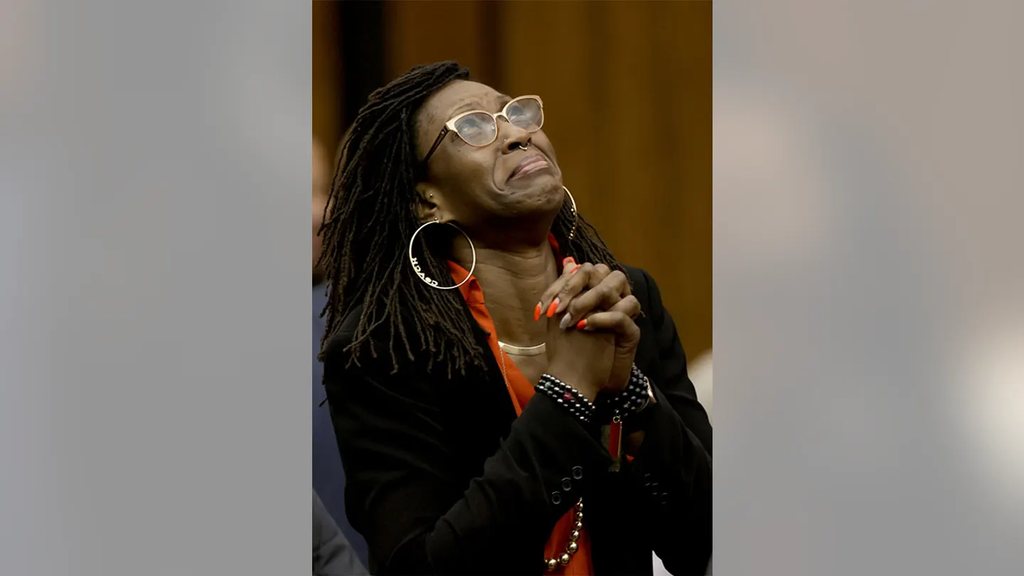
His story isn’t just about what was taken. It’s about the people who refused to let the system forget him — and the reminder that justice, however delayed, however maddening the wait, can still arrive. Not with fanfare. Sometimes just with a judge’s signature, and a man finally allowed to cry.