
“Was Your Dad Speeding?” — The Judge Who Let A Little Boy Decide His Father’s Fate


A father stood before Judge Frank Caprio in Providence Municipal Court, facing a ticket for going 10 miles per hour over the speed limit. It was, on paper, about as routine as a case gets. But Caprio — the judge who spent decades turning Rhode Island traffic court into something the whole world eventually tuned in to watch — rarely handled “routine” the way other courtrooms did.
Sitting beside his father that day was his young son. Instead of simply reviewing the ticket and issuing a ruling, Caprio turned his attention to the boy directly. He asked him something most judges would never think to ask a child under oath, or otherwise: was your dad actually speeding?
There was no hesitation, no glancing nervously at his father for a cue on what to say. The boy answered honestly — yes, his dad had been speeding. It would have been easy for a child in that position to soften the truth, especially sitting right next to the parent he clearly loved. He didn’t.
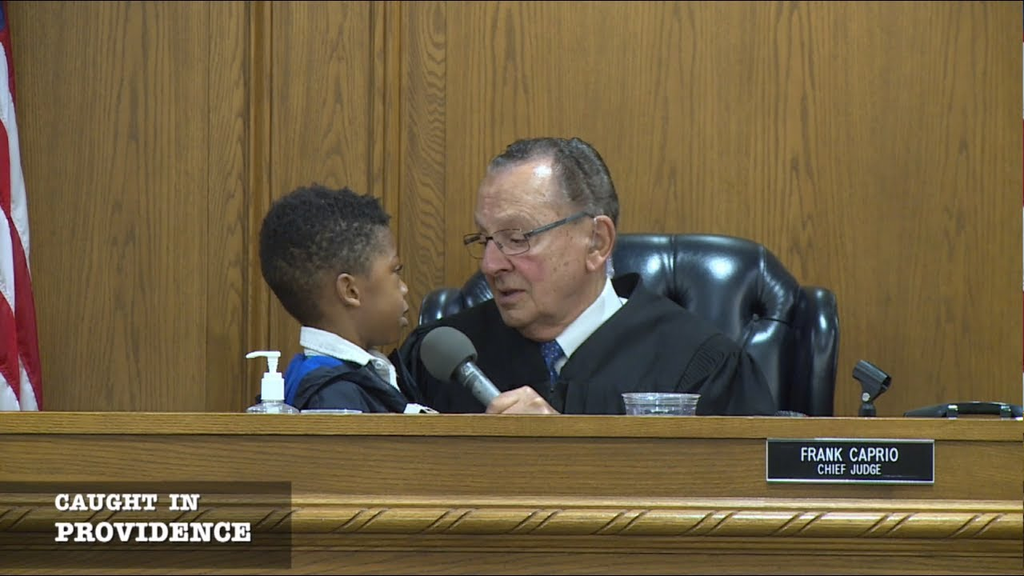
Caprio’s response wasn’t punishment. It was praise. Rather than using the boy’s honesty against his father, the judge turned the moment into exactly the opposite lesson — celebrating the courage it took for a child to tell the truth, even when it might have gotten his dad in trouble. Then he dismissed the case entirely.
It’s a small ruling in the grand scheme of a courtroom that heard thousands of cases over Caprio’s decades on the bench. But it captures something that made his courtroom different from almost any other in the country: the belief that justice didn’t always have to be about extracting the harshest possible consequence — sometimes it could be about noticing what actually mattered in the moment, and rewarding it.
Judge Caprio passed away this year, but clips like this one are exactly why the world gave him the nickname “the world’s kindest judge.” He didn’t need a child to lie to protect his father. He needed a child to tell the truth — and when that’s exactly what he got, the truth itself became the reason for mercy, not the reason for a fine.